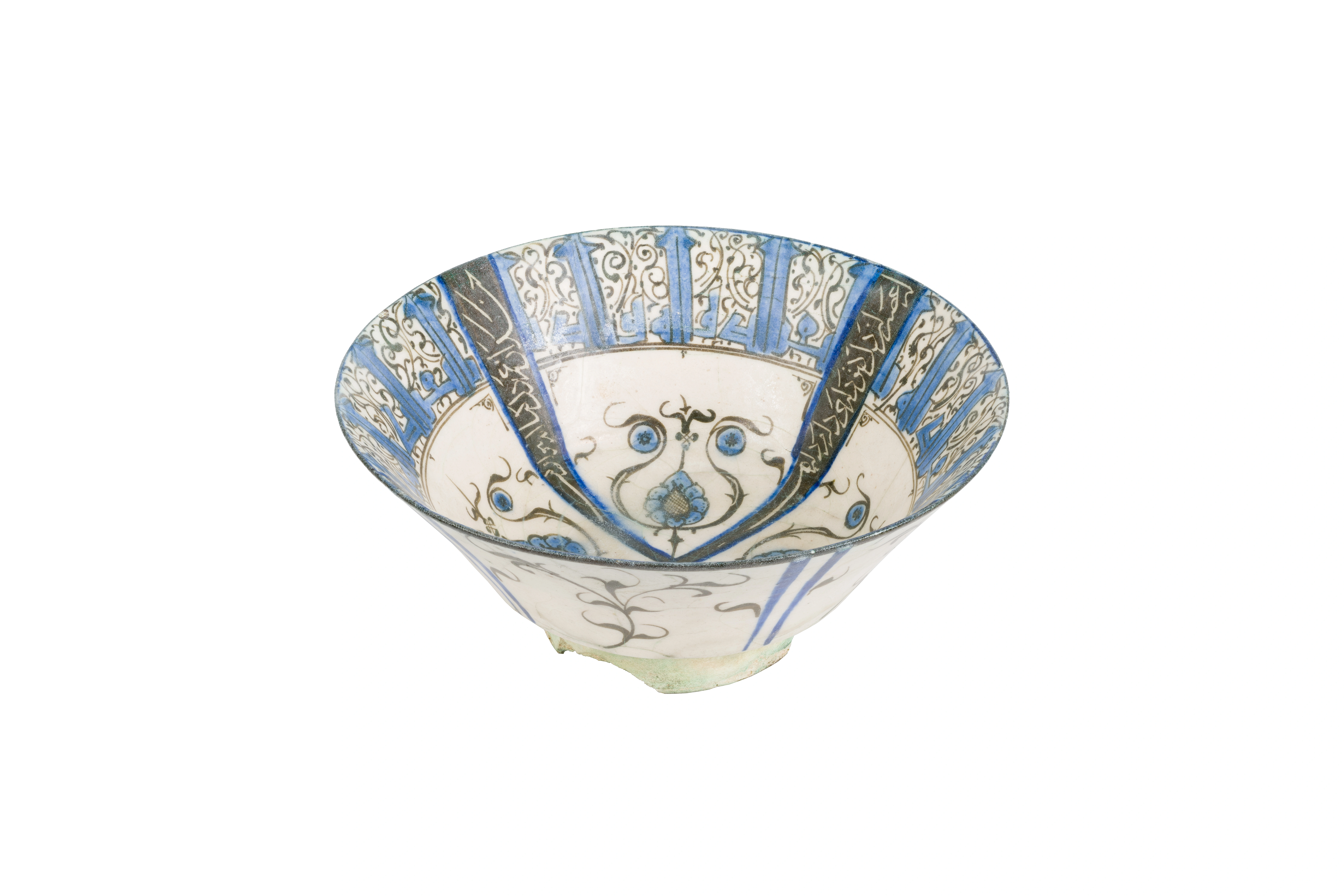
Bowl with blue and white pattern
13th–14th centuries. Central Asia. Ceramic. 9.7 × 22.4 cm
Audio guide
Audio available in: RU
Description
This elegant ceramic bowl reflects the refined artistic traditions of Central Asia in the thirteenth and fourteenth centuries.
The decoration follows a carefully organized radial design. The ornament radiates from the center like beams of light, creating a visual sense of harmony and balance. In Islamic art, such compositions often symbolize the unity of divine creation expressed through ordered multiplicity.
Particularly striking is the contrast between the deep cobalt blue and the fine black linear decoration. These features demonstrate the development of underglaze painting techniques, one of the major technological achievements of Islamic ceramics. Such innovations would later influence the development of the famous blue-and-white porcelains of Ming China.
The calligraphic bands along the rim further emphasize the intellectual dimension of such objects. In Islamic material culture, inscriptions often carried poetic verses or blessings, transforming everyday objects into vehicles of cultural meaning.
Objects of this kind were not merely functional vessels but also markers of refinement and social status. This bowl illustrates how decorative arts formed an essential foundation for the artistic flourishing that would later reach its peak in the Timurid period.