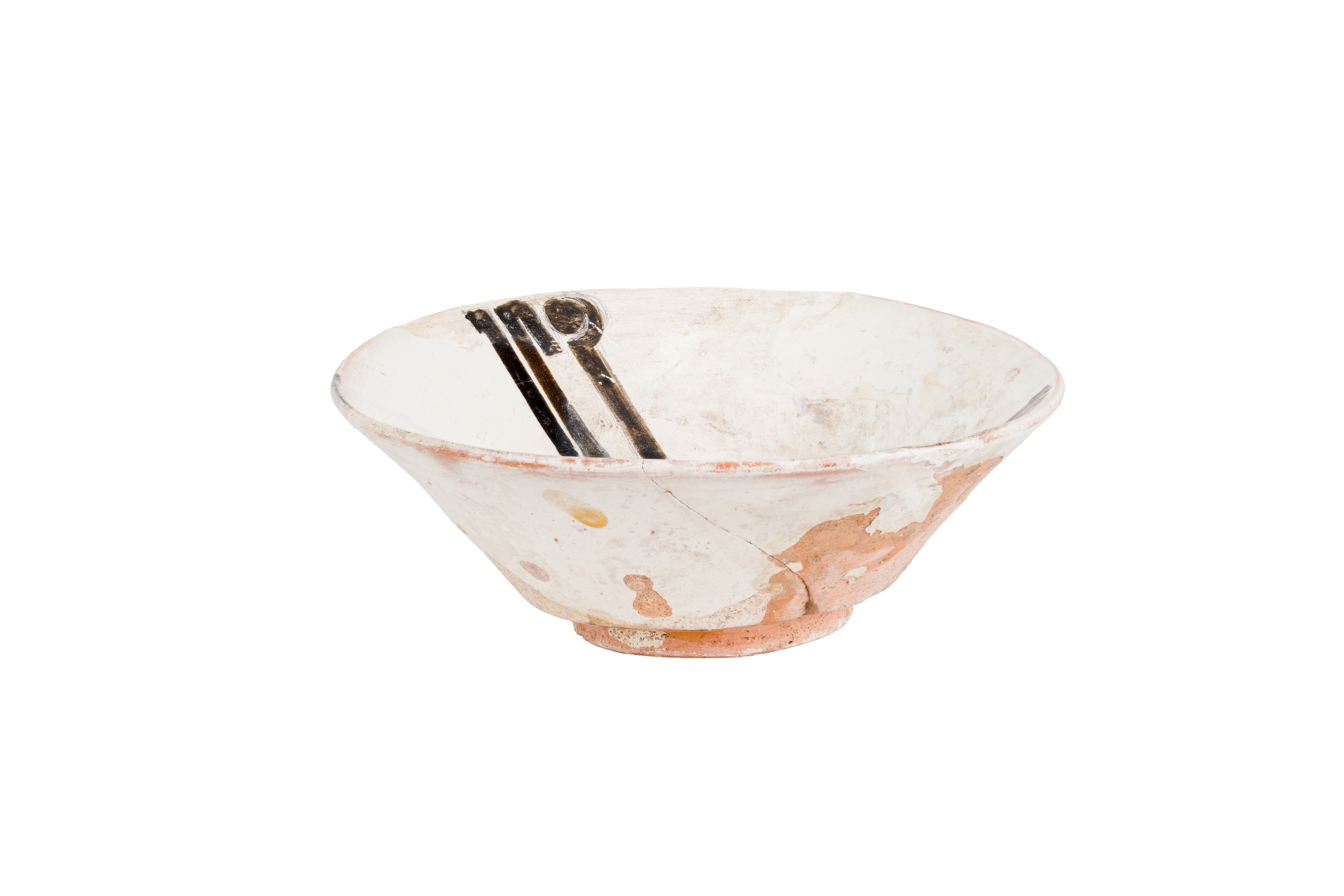
Plate with Kufic inscription
11th–12th centuries CE. Samarkand, Afrasiyab. Ceramic; natural dyes/ 4.7 × 12.5 cm
Audio guide
Description
In this small dish, writing becomes part of an everyday object. The Kufic inscription is arranged around the center, immediately establishing a visual rhythm. Even without reading the text, the viewer perceives its order and the strength of the graphic form.
The dish was produced in the 11th–12th centuries in Samarkand, in the area of Afrasiab, one of the major urban centers of Central Asia. The contrast between dark lettering and a light background emphasizes clarity of design, while the use of natural pigments reflects well-developed ceramic traditions. Here, inscription is not an accessory but the main decorative element.
In urban culture of the period, writing extended beyond books and documents. Words appeared on vessels, textiles, and architectural surfaces, often conveying wishes, blessings, or ethical ideas. Kufic script, with its restrained and monumental character, was especially suited to such objects.
Traces of wear and surface losses indicate active use. This dish shows how, during the First Renaissance, written culture entered everyday life, making the word a visible and meaningful part of the city’s material environment.