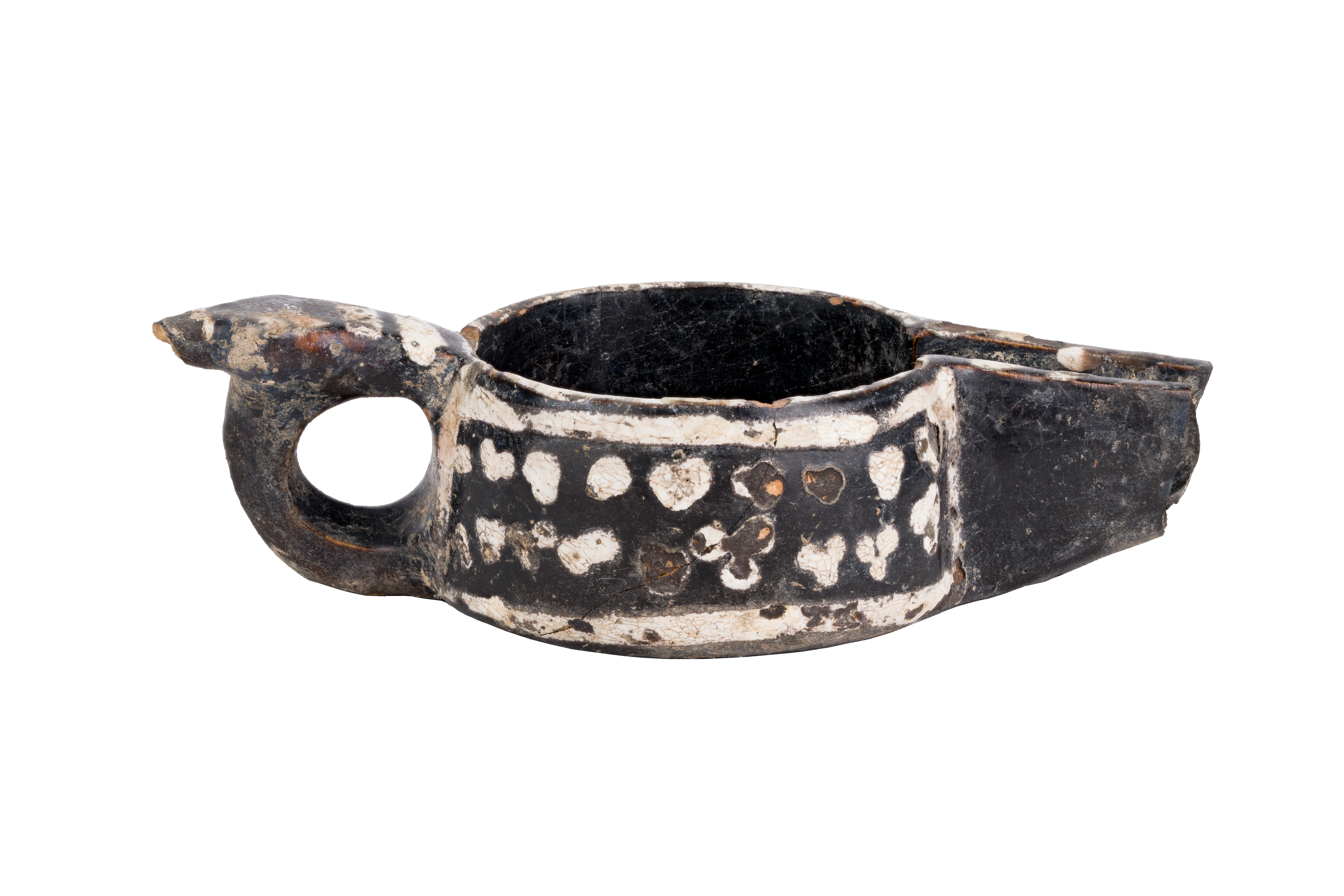
Oil Lamp
11th–13th centuries CE. Central Asia. Ceramic; natural dyes. 13.8 × 7.4 × 3.3 cm
Audio guide
Description
This oil lamp represents one of the most common yet symbolically rich objects of medieval Central Asian life. Between the 11th and 13th centuries, such lamps illuminated homes, workshops, caravanserais, and places of learning, from private rooms to madrasas.
Its design is simple and functional: a rounded reservoir for oil, an elongated spout for the wick, and a handle that allowed safe handling of fire. The dark slip surface, decorated with lighter dotted motifs made from natural pigments, creates a strong visual contrast, enhancing the lamp’s silhouette in low light. These features reflect regional ceramic traditions and practical craftsmanship.
In Islamic thought, light is more than a physical phenomenon. It symbolizes knowledge, divine guidance, and truth itself. Lamps like this accompanied reading, writing, and prayer, becoming silent participants in intellectual and spiritual practices during the First Renaissance of Central Asia.
This modest object reminds us how everyday tools could embody profound cultural and philosophical meanings.