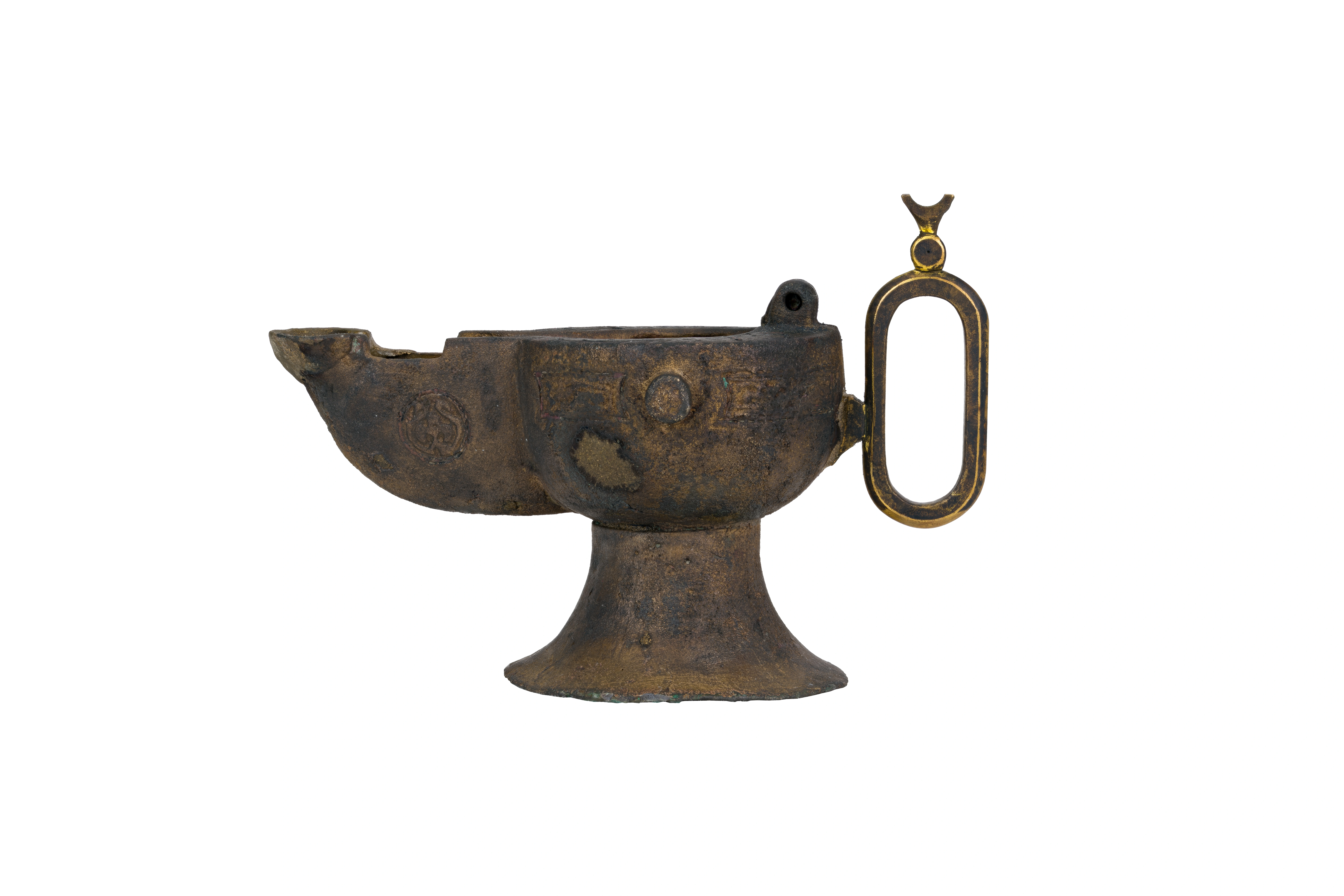
Oil Lamp
10th–11th centuries СЕ. Bukhara. Brass. 8 × 12 cm
Audio guide
Audio available in: UZ
Description
This object represents one of the most essential tools of intellectual life in the medieval Islamic world.
This 10th–11th century brass oil lamp from Bukhara provided light for scholars, scribes, and theologians. Under such illumination, manuscripts were read, texts were copied, and ideas were debated.
Its form is highly functional: a rounded body for oil, an elongated spout to hold the wick, and a looped handle for portability. This design reflects the advanced metalworking traditions of the region.
Beyond its practical use, the lamp carries symbolic meaning. In Islamic thought, light is a central metaphor for knowledge and divine truth, closely associated with the famous “Light Verse” of the Qur’an.
During this period, Bukhara was a major intellectual center, home to scholars who shaped philosophy, medicine, and theology. This lamp silently belongs to that environment.
Its minimal decoration and emphasis on form reflect aesthetic principles focused on function, material, and symbolic resonance.
This object reminds us that intellectual history is built not only in monumental spaces, but also in the quiet, steady light of everyday work.