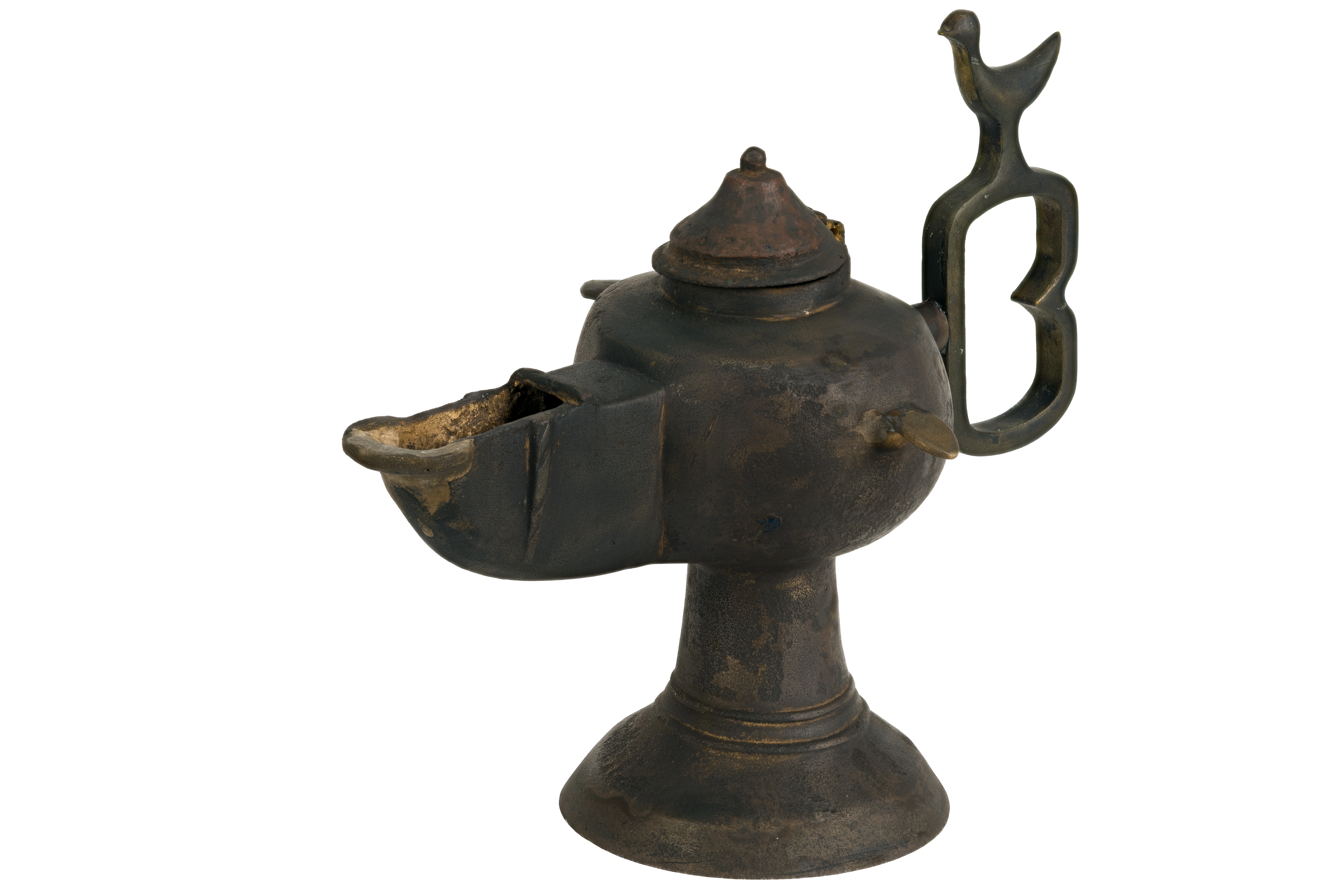
Oil Lamp
11th century СЕ. Mawarannahr.Brass; casting. 12.8 × 15.4 cm
Audio guide
Description
This 11th-century oil lamp from Mawarannahr illustrates how light functioned both practically and symbolically in the medieval Islamic world. The elongated nozzle held the wick, while the closed reservoir conserved oil and shielded the flame. A cast handle topped with a bird-like finial offered a secure grip and carried protective, apotropaic meaning–animal motifs were commonly associated with well-being and safeguarding the household.
Such lamps illuminated homes, workshops, madrasas, and mosques. During the period often described as the First Islamic Renaissance, light was understood as a metaphor for knowledge and divine presence. Traces of soot around the nozzle and inside the vessel attest to long-term, everyday use rather than ceremonial display.
The object reflects advanced metalworking skills in Central Asia, such as precise casting, thoughtful ergonomics, and restrained decoration unified by function and meaning.