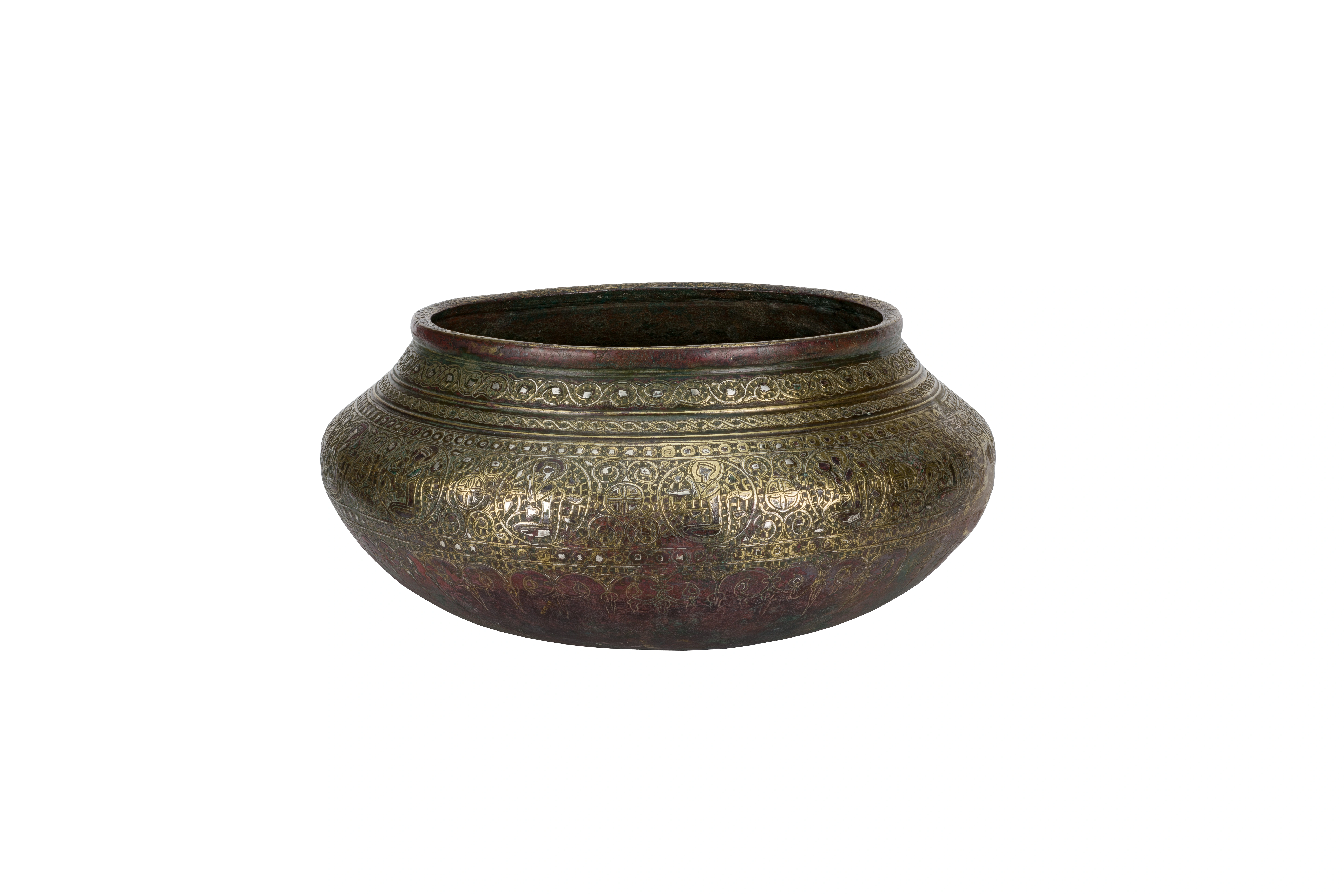
Water Vessel
12th–13th centuries CE. Central Asia. Bronze. 11.8 × 26.2 cm
Audio guide
Description
This bronze water vessel dates to the 12th–13th centuries and comes from Central Asia. Objects of this type were an essential part of everyday life, used for storing and pouring water, a substance of profound practical and symbolic importance in Islamic civilization.
Its rounded body and stable base reflect a functional design intended to keep water cool in a warm climate. The surface is decorated with finely engraved vegetal patterns and epigraphic elements, typical of Central Asian metalwork during a period of urban prosperity in cities such as Bukhara, Samarkand and Termez.
In Islamic thought, water symbolizes purity, mercy, and life itself. Ritual cleanliness is a fundamental religious requirement, and vessels like this were commonly used in domestic settings as well as in religious and educational environments. They formed part of the material culture surrounding scholars, theologians, and Sufi masters, whose spiritual legacy is evoked by the name of Imam al-Tirmidhi.
This object offers insight into the refined craftsmanship of medieval Central Asia and illustrates how everyday items were deeply embedded in the spiritual and cultural practices of their time.