Video available in: UZ
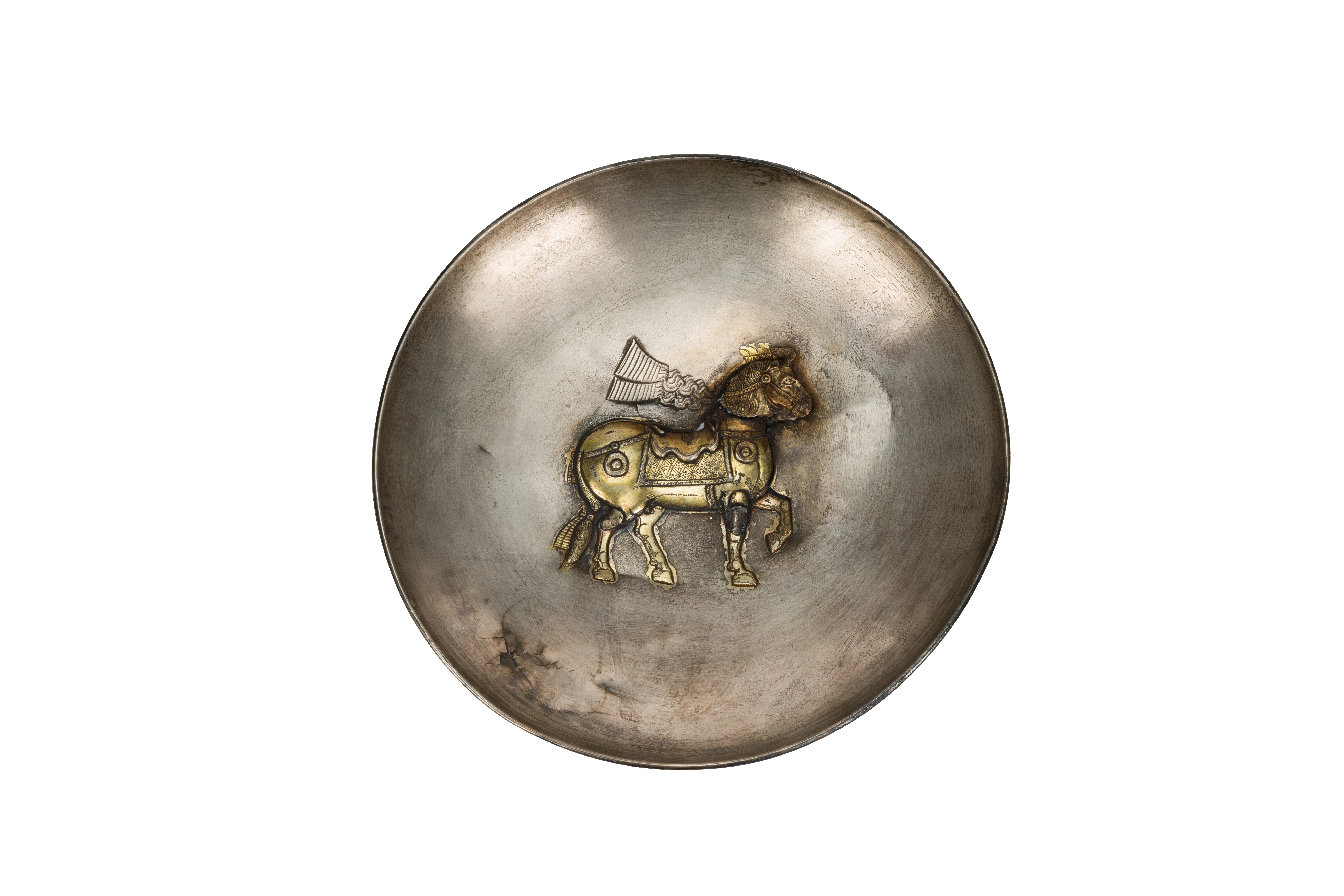
Dish with a Horse Image
7th–9th centuries СЕ. Central Asia. Silver and gold. 4 × 21.8 cm
Audio guide
Description
This silver dish dates to the 7th–9th centuries CE and bears the image of a horse, representing Central Asian metalwork from the transitional period between Late Antiquity and the early medieval era.
The bowl has a broader and more fluid profile in comparison with earlier examples. At the center appears a horse rendered in repoussé and refined by engraving, with traces of partial gilding. The body of the animal is generalized, while the harness details are emphasized through rhythmic linear articulation.
Unlike earlier compositions, the surrounding field remains largely unadorned, allowing the surface of the metal and its interaction with light to play a more prominent visual role.
The horse continues to serve as a marker of status and martial culture, though its representation becomes more concise and stylized.
This dish illustrates the evolution of regional artistic language and the enduring significance of equine imagery in Central Asian tradition.