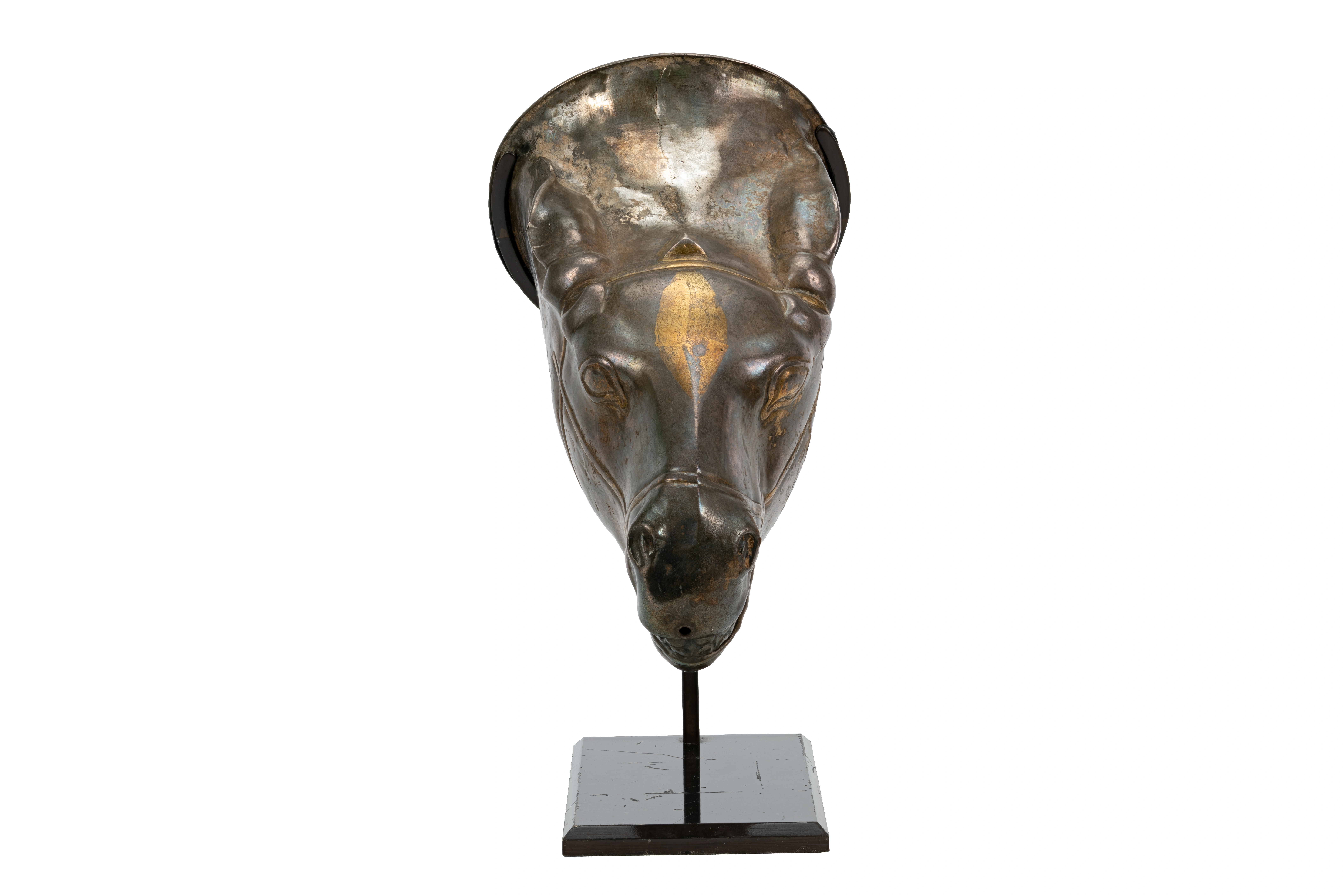
Horse-Head Rhyton
4th–3th centuries BCE. Central Asia. Silver, gilt. 22.7 × 12.9 × 12.9 cm
Audio guide
Description
In front of you is a riton, a ritual drinking vessel made in the 4th–3rd centuries BCE in Central Asia, during the Greco-Bactrian period.
Such dishes were used during solemn receptions and religious ceremonies.
It was believed that the drink gained special power and blessing by passing through the symbol of a sacred animal.
The riton is made of gild silver. The image of the horse combines Hellenistic artistic plasticity and local Bactrian traditions, reflecting the cultural synthesis of that time.
A number of experts believe that Alexander the Great's legendary horse Bucephalus could be depicted on the rhyton. Although this hypothesis is controversial, the object itself perfectly conveys the spirit of that era, when the horse represented power, militancy and the greatness of kingdoms.