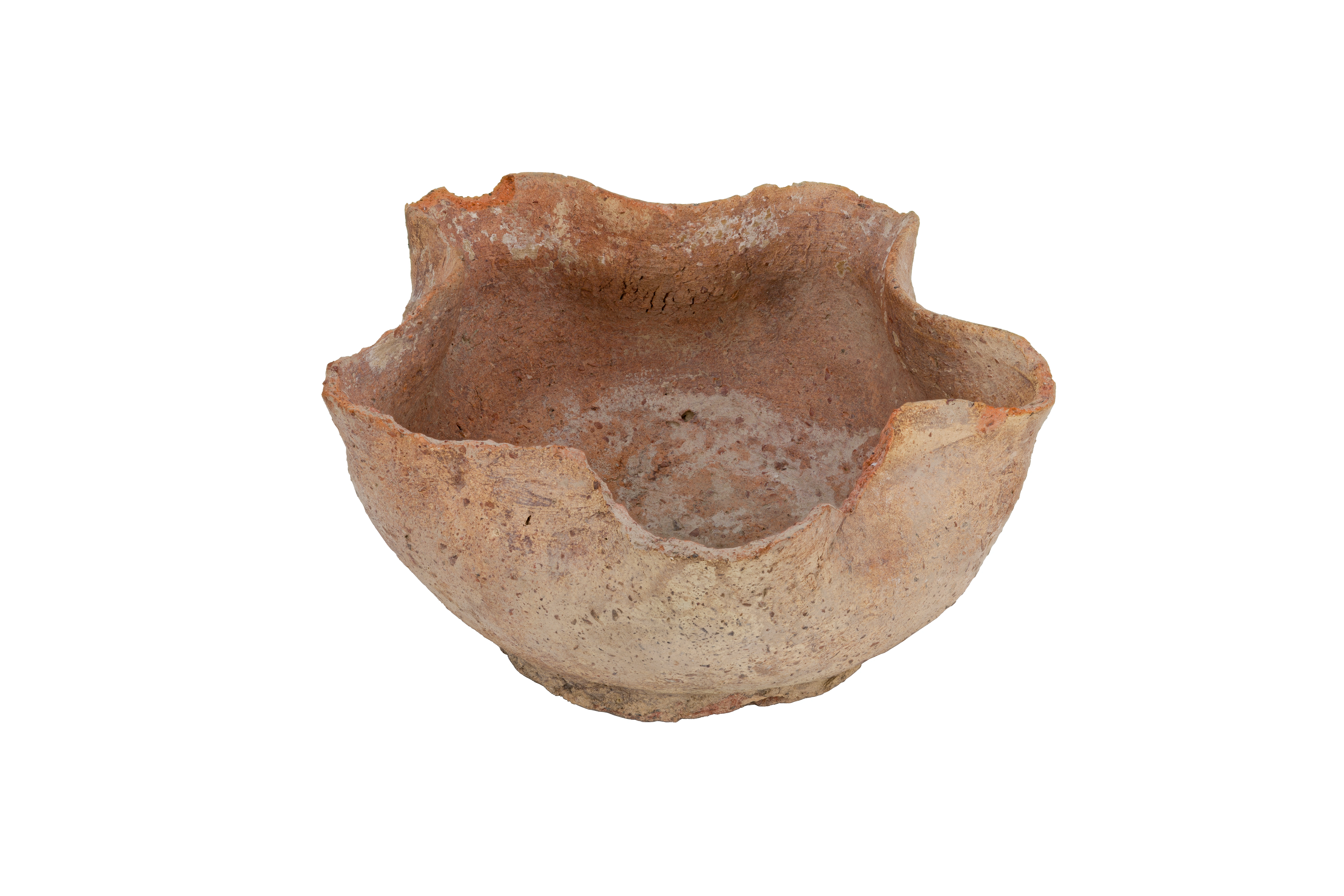
Five-sided Bowl
4th–5th centuries CE. Central Asia. Ceramic. 7.2 × 15 cm
Audio guide
Description
This five-sided bowl dates to the 4th–5th centuries CE and was produced in Central Asia.
Its silhouette resembles an open flower or star, with an undulating rim forming five distinct projections that create a rhythmic outline.
Such a form was unlikely to have been accidental. In Late Antiquity and the early medieval period, craftsmen often combined functionality with symbolic or decorative considerations. A five-part composition may have been associated with concepts of harmony and structural order.
The bowl is made of fired clay. Traces of hand-forming and surface finishing remain visible, providing insight into the production techniques employed. It was likely used for everyday purposes, such as serving or storing food; however, its unusual shape may also indicate a special or possibly ritual function.
This ceramic vessel reflects the aesthetic preferences of its time and illustrates how utilitarian objects could also carry cultural meaning.