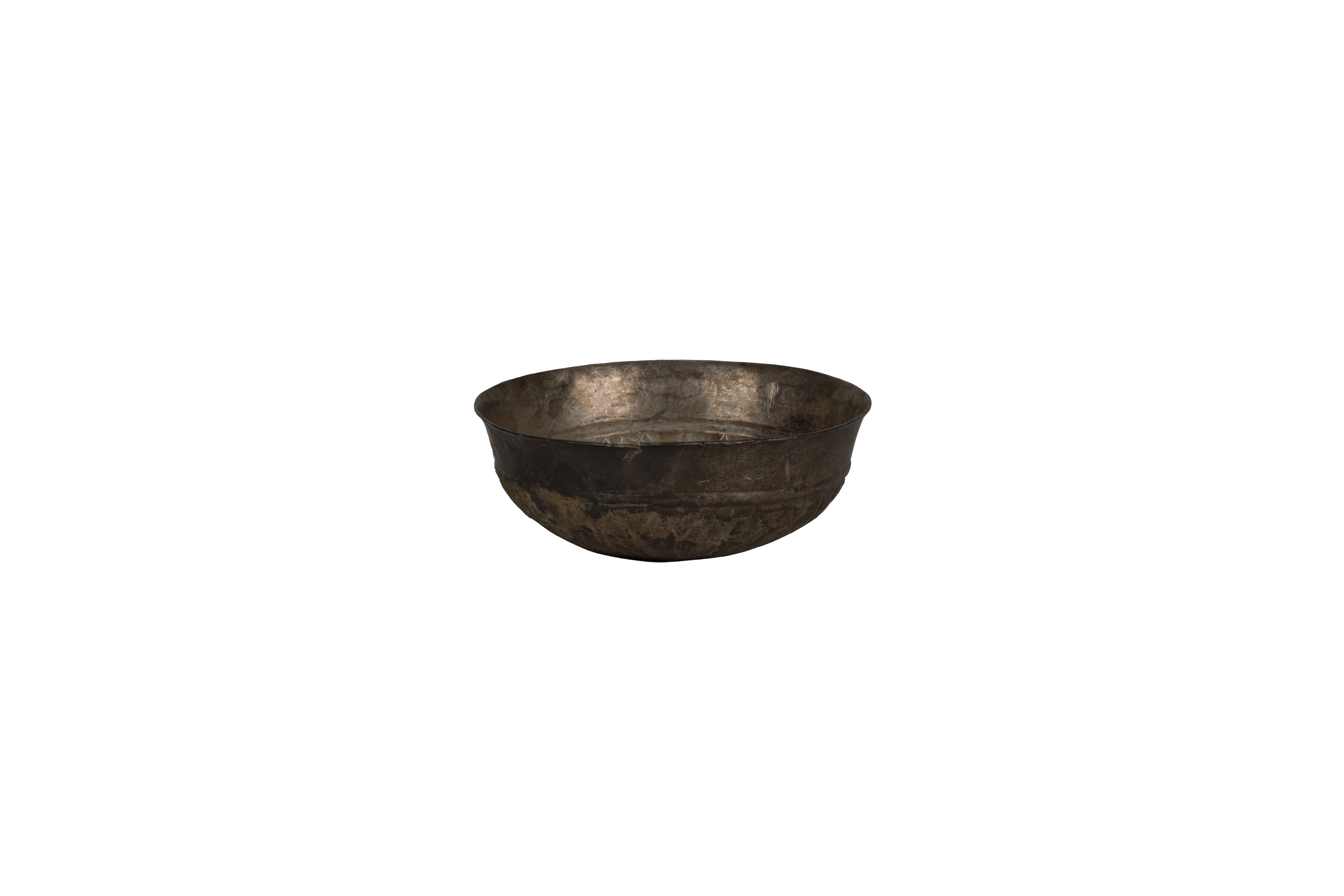
Вowl
6th–8th centuries CE. Samarkand. Silver. 6.7 × 18 cm
Audio guide
Description
This silver bowl was made in Samarkand during the 6th–8th centuries CE, a period marked by the flourishing of Sogdiana.
In this era, silver vessels were far more than household utensils. They signified social rank, served as diplomatic gifts, and circulated as luxury goods along the Silk Roads. Such bowls accompanied aristocratic banquets and were preserved as valuable heirlooms.
The interior of the bowl is organized in a radial composition. This carefully structured design evokes a solar disk — a motif frequently associated with light, prosperity, and royal symbolism in Sogdian art.
Sogdian silversmiths mastered techniques such as repoussé and engraving. Their works have been discovered far beyond Central Asia — in China, the Altai region, the Volga area, and southern Siberia.
This bowl attests to Samarkand’s role as both a commercial and artistic center within the Silk Road world.