Video available in: UZ
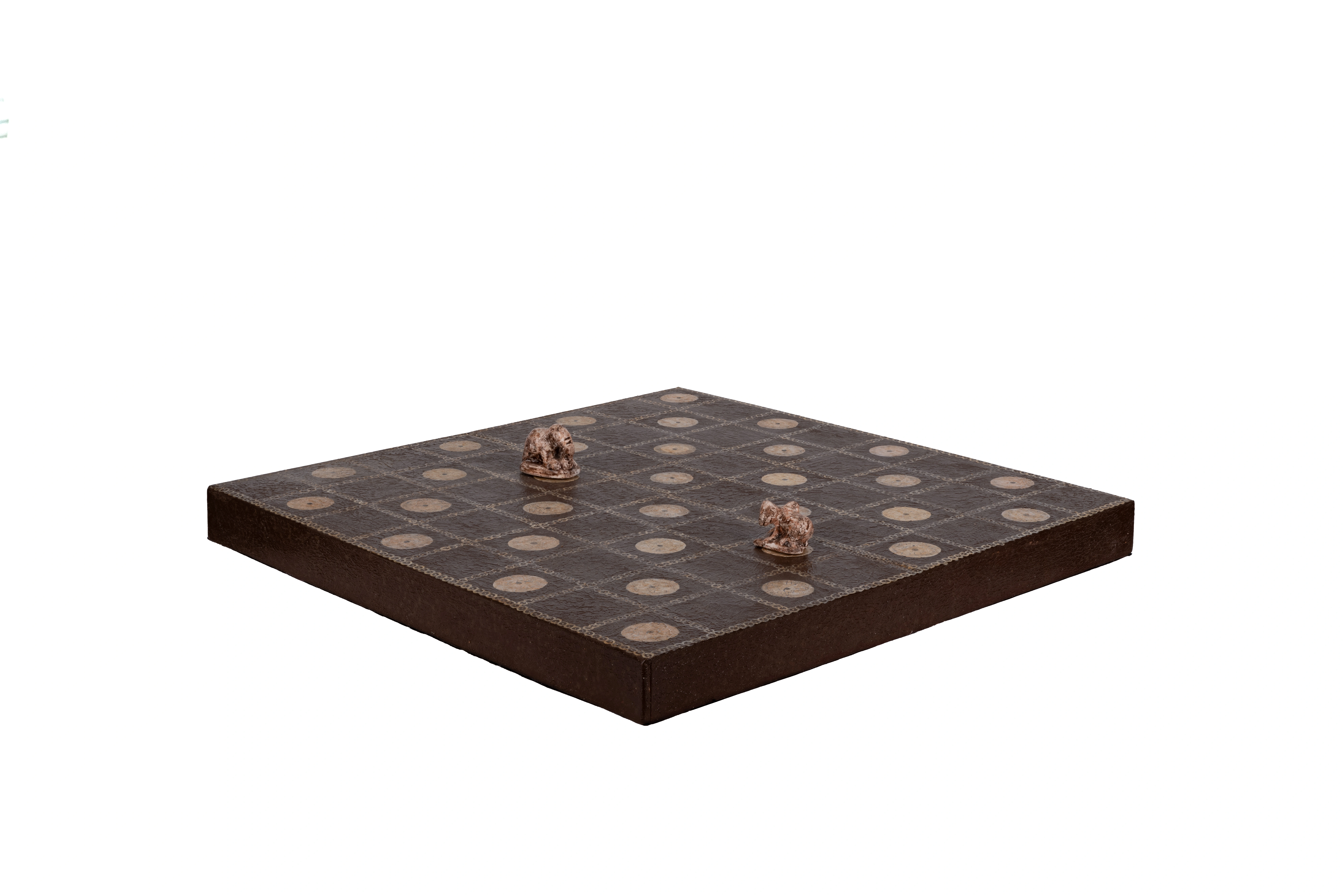
Chess board and Pieces
2nd–3rd centuries CE. Dalvarzintepa, Surkhandarya Region. 2.4 × 2.9 × 1.8 cm. Replica
Audio guide
Description
This chessboard and associated bone pieces were discovered at the ancient site of Dalverzintepa in the Surkhandarya region and date to the 2nd–3rd centuries CE.
Comparable finds from Dalverzintepa and Afrasiab are regarded as among the earliest archaeological objects associated with the history of chess-like games. Their presence in a major Kushan period urban center indicates a developed intellectual and social culture in which strategic board games formed part of elite leisure.
During the 1st–3rd centuries CE, Dalverzintepa functioned as a key cultural and economic hub along major caravan routes. Indian cultural tradition, Iranian cultural tradition, and Hellenistic tradition intersected in this region. Within such a multicultural environment, early forms of strategic board games may have developed and circulated.
Although the precise origins of chess remain a subject of scholarly debate, these finds underscore the significant role of Central Asia in the early history of intellectual games.