Video available in: UZ
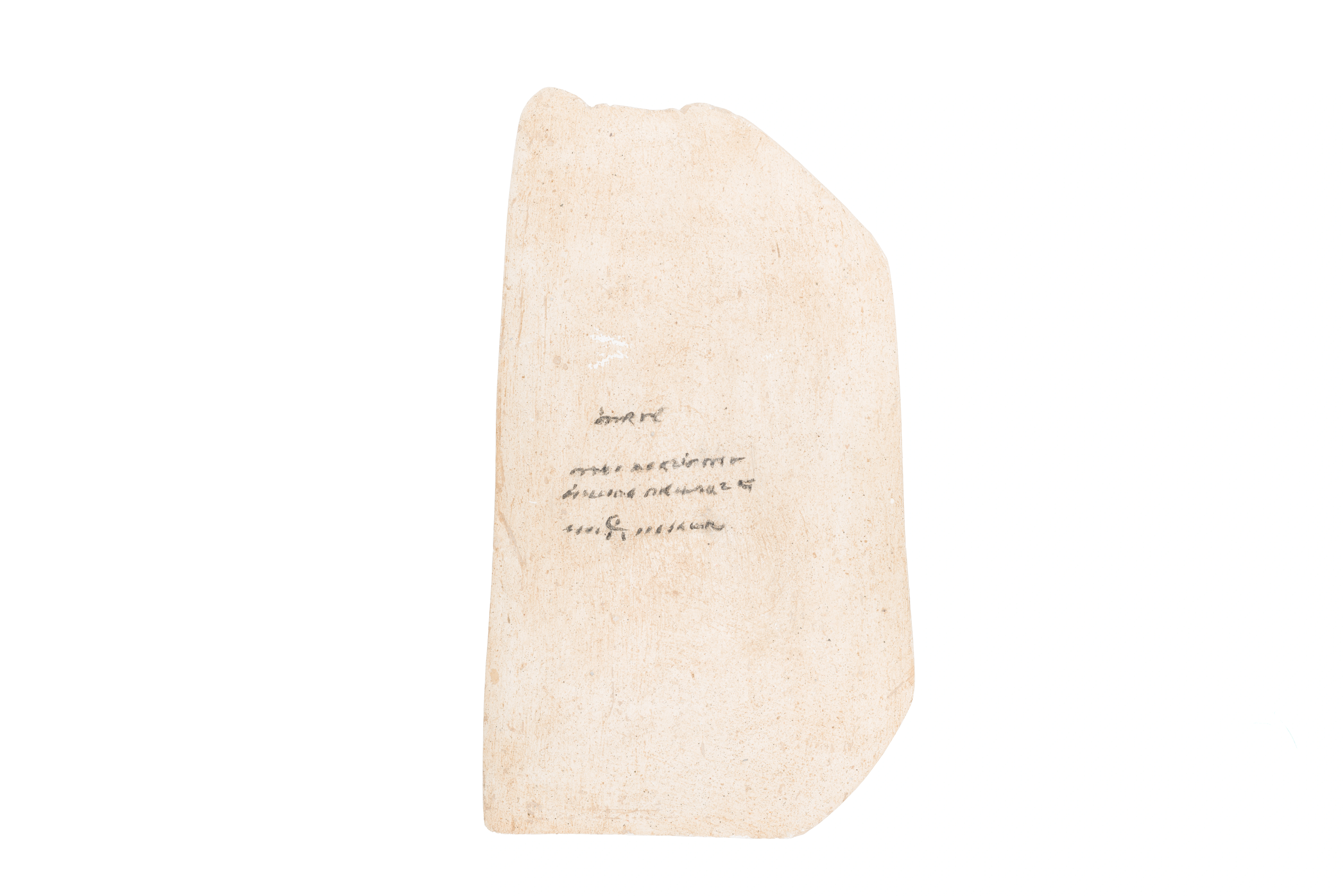
Khorezmian Inscription on the Surface of an Ossuary
7th century CE. Toqqala, Khorezm. 30 × 17.5 cm
Audio guide
Description
This is a 7th-century Khorezmian inscription carved on the surface of an ossuary (ostadon), a type of funerary container used in Zoroastrian tradition.
In Zoroastrianism, the body was neither buried nor cremated. After exposure and ritual purification, the bones were collected and placed in specially made containers such as this one.
This example was discovered at Toqqala, one of the ancient districts of Khorezm. The inscription is written in the Khorezmian script, which ultimately developed from the Aramaic writing system. Such texts typically recorded the name of the deceased, genealogical information, or brief religious formulas.
These inscriptions are of considerable historical significance. They attest to a developed written culture and a structured religious tradition in ancient Khorezm. Studies by scholars, including S. P. Tolstov, have demonstrated that Khorezmian writing formed an independent epigraphic tradition within the early medieval polity of Khorezm.
This artifact serves not only as a funerary object but also as documentary evidence of memory, belief, and early political organization in the region.