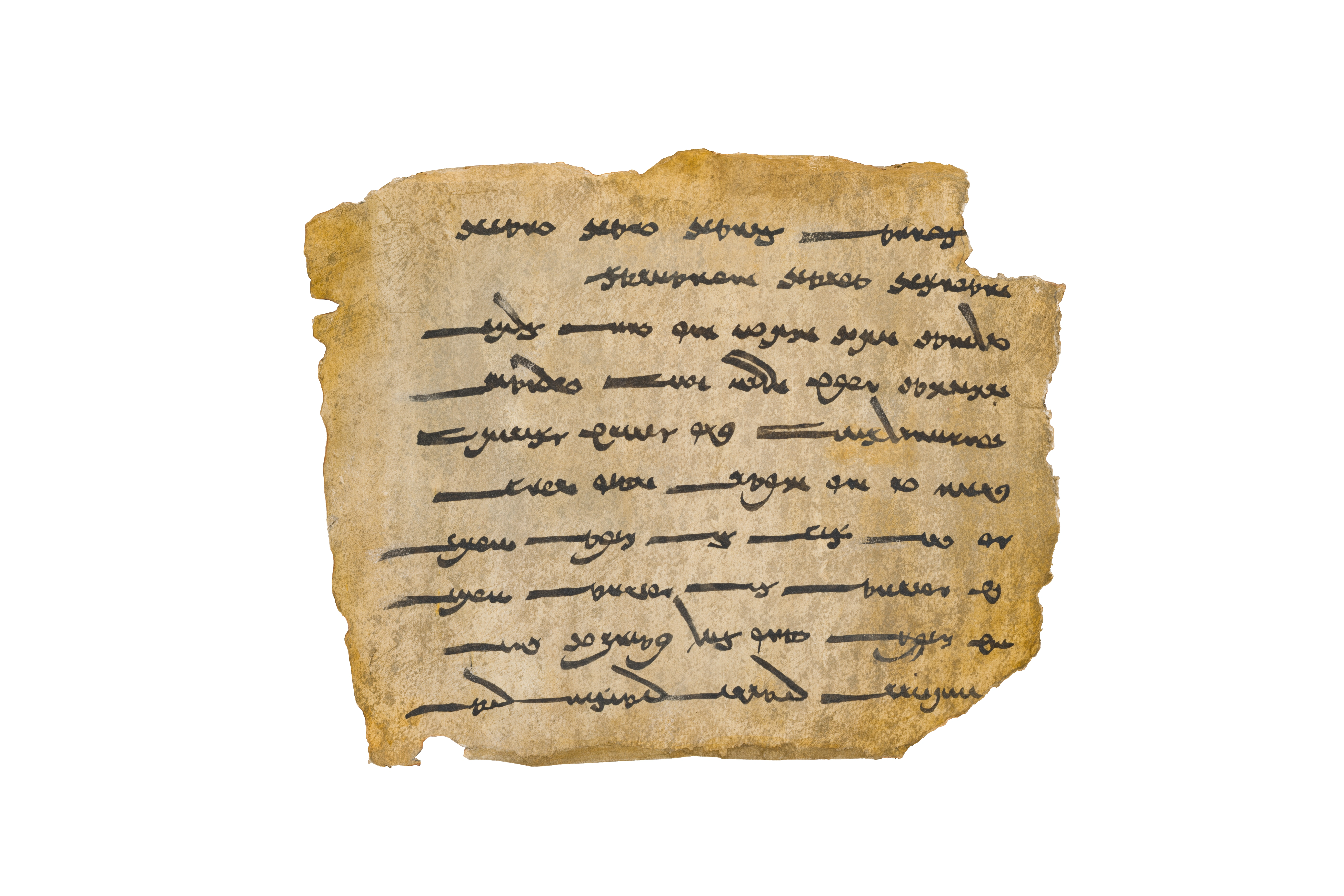
Fragment of a Prayer from the Avesta
7th–8th centuries CE. Sogdian script. Paper. 29.5 × 25 cm
Audio guide
Description
This exhibit is a fragment of a prayer from the Avesta, written in Sogdian script and dating to the 7th–8th centuries CE.
The Avesta is the sacred corpus of Zoroastrianism, one of the oldest religious traditions of Iran and Central Asia. Originally transmitted orally in early Iranian languages, parts of the text were later translated and copied into regional languages, including Sogdian.
The Sogdians, renowned traders along the Silk Roads, were not only merchants but also mediators of religious and cultural ideas. The use of Sogdian script for an Avestan prayer demonstrates the deep integration of Zoroastrian tradition into the cultural landscape of Sogdiana.
The text reflects the central Zoroastrian concept of asha—Truth or Cosmic Order—often expressed in prayers proclaiming that “Truth is the highest good.”
This fragment attests to the spiritual life, literary culture, and intercultural connections of early medieval Central Asia.