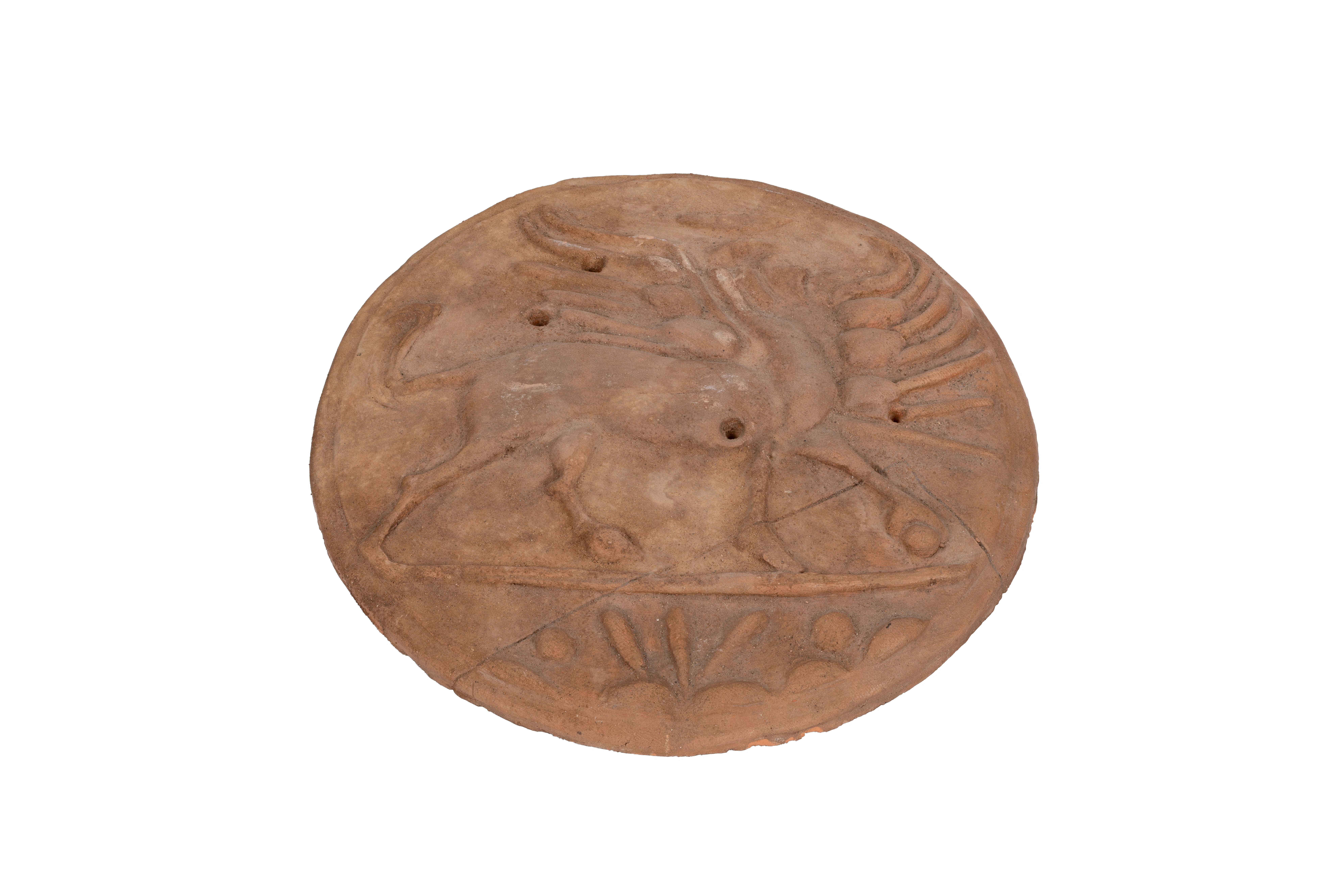
Lid with Relief Image of Gopatshah
4th–2nd centuries BCE. Khorezm. Ceramic. Diameter: 24 cm
Audio guide
Description
This ceramic lid bearing a relief image of Gopatshah dates to the 4th–2nd centuries BCE and originates from ancient Khorezm.
At the center of the composition appears a winged mythical creature. Its body is shown in dynamic motion, with extended wings and contours emphasized in relief. Such imagery combines zoomorphic features with the attributes of a sacred protector, a characteristic motif of Khorezmian art during the formation of an independent polity.
The name “Gopatshah” consists of two elements: shah, meaning ruler or king, and Gopa, likely connected to a local dynasty or personal name. Scholars interpret this figure either as a symbolic representation of a historical ruler or as a mythological embodiment of authority and protection.
The lid was discovered during archaeological excavations at the settlement of Kalaly-gyr II. The relief technique—a raised image modeled on the surface—reflects the developed artistic traditions and ideological vocabulary of the period.
This object attests to the era in which Khorezm emerged as an independent political entity, developing a distinct visual language in which power, myth, and religious concepts were unified within a single artistic form.