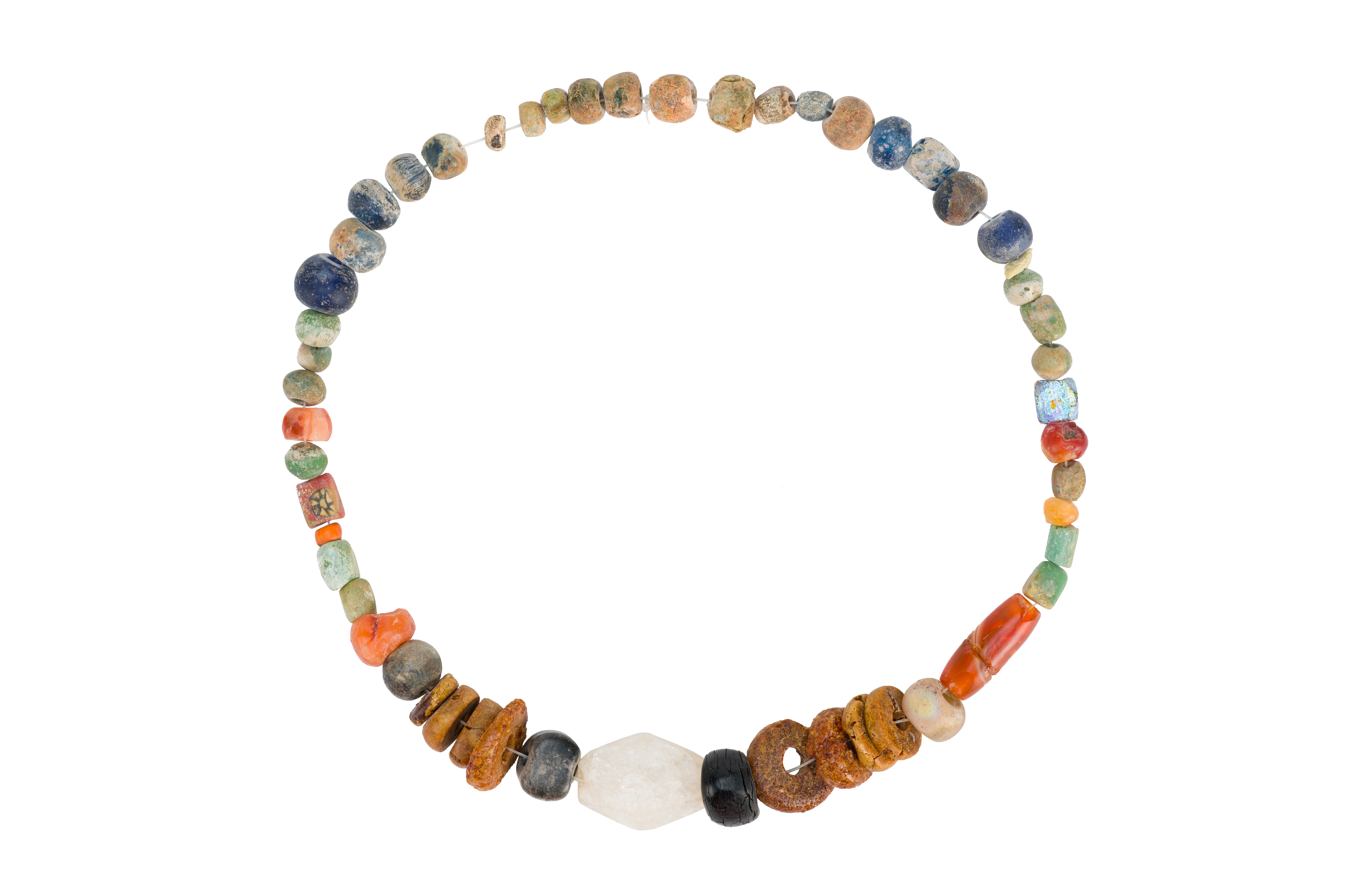
Necklace
2nd–4th centuries СЕ. Central Asia. Lapis lazuli, carnelian, turquoise, coral. Length: 46 cm
Audio guide
Description
A strand of multicolored stones and organic materials forms an ornament that combines the natural resources of the region with the aesthetic sensibilities of its time. These beads date to the 2nd–4th centuries CE and originate from the region of ancient Bactria, one of the major cultural centers of Central Asia.
The necklace includes lapis lazuli, carnelian, turquoise, and coral. Lapis lazuli, extracted from the mountains of Badakhshan, was highly valued for its deep blue color and was exported far beyond the region. Carnelian and turquoise provided vivid chromatic accents, while coral indicates long-distance trade connections extending to the Mediterranean and the Indian Ocean.
The diversity of bead shapes and sizes suggests prolonged use or the combination of elements from different sources. Such ornaments served not only decorative purposes but also reflected social status and participation in the commercial and cultural networks of the ancient world.
Within the section “Ancient Bactrian Civilization,” this necklace illustrates how the region became integrated into international exchange routes linking East and West long before the formation of later empires.