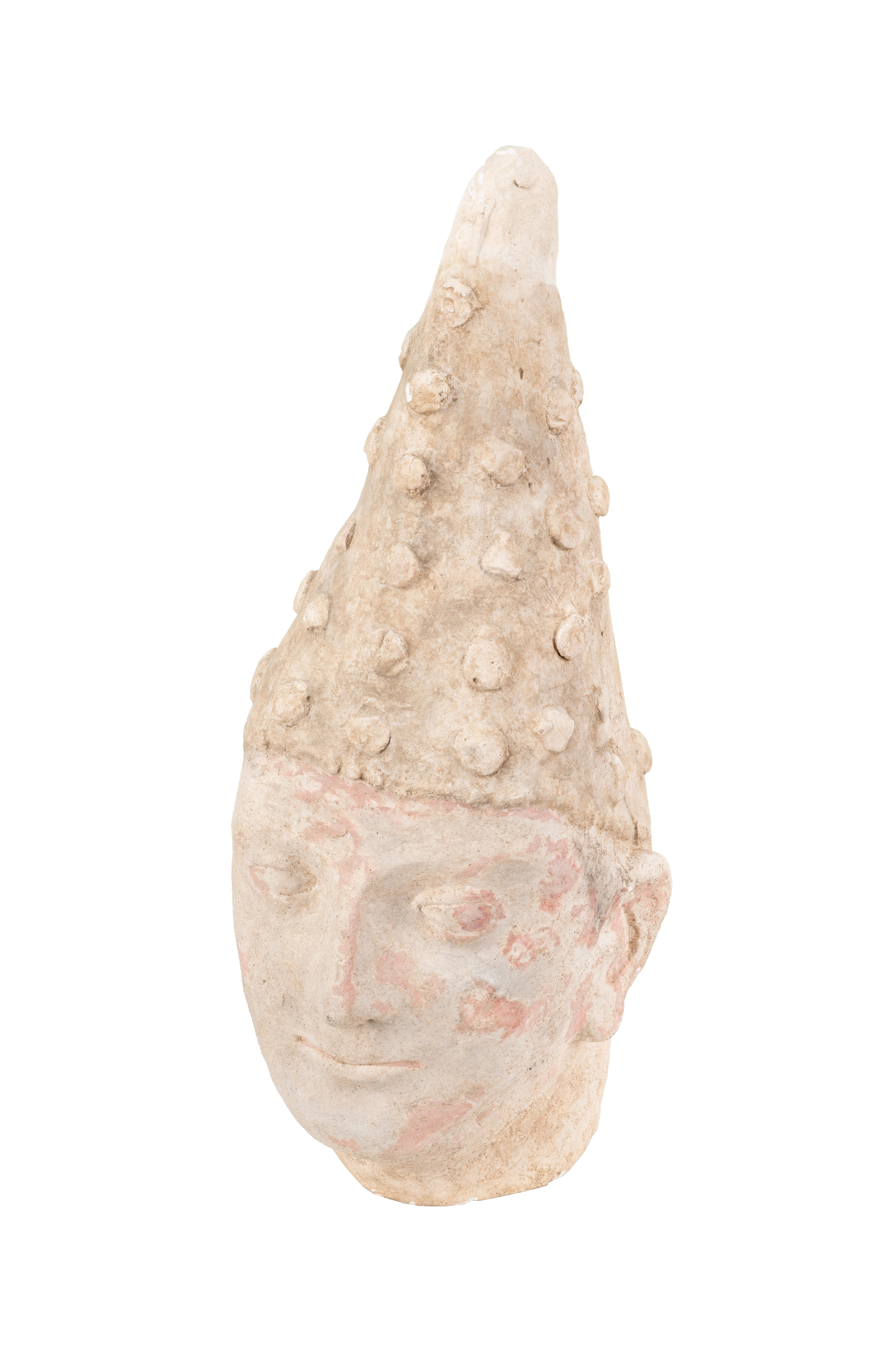
Head of a Kushan Prince
1st–2nd centuries СЕ. Dalvarzintepa, Surkhandarya Region. 46 × 18.5 cm. Replica
Audio guide
Description
This head of a Kushan prince was discovered in 1967–1968 at the archaeological site of Dalverzintepa in the Surkhandarya Region.
The fragment once formed part of a large statue uncovered in the so-called “Hall of Kings” within a Buddhist sanctuary, where sculptures of the Buddha, bodhisattvas, devatas, and secular figures were also found.
The young prince is portrayed with gentle facial features and a concentrated gaze. He wears a tall conical headdress decorated with relief “scales,” an element indicating royal lineage and symbolizing elevated status. Traces of white, orange, and black pigments reveal that the sculpture was originally brightly painted: the face likely bore a reddish tone, while details of the headdress may have been gilded.
The Kushan period was characterized by active cultural exchange between India, Iran, and Central Asia. The prince’s appearance combines local artistic traditions with elements derived from Hellenistic sculptural forms. This sculpture reflects the artistic flourishing of the region and highlights Surkhandarya’s role as one of the major centers of Buddhist culture in ancient Uzbekistan.